Music Therapy with Specific Populations
 Every Stage
Music Therapy in Every Phase of Life
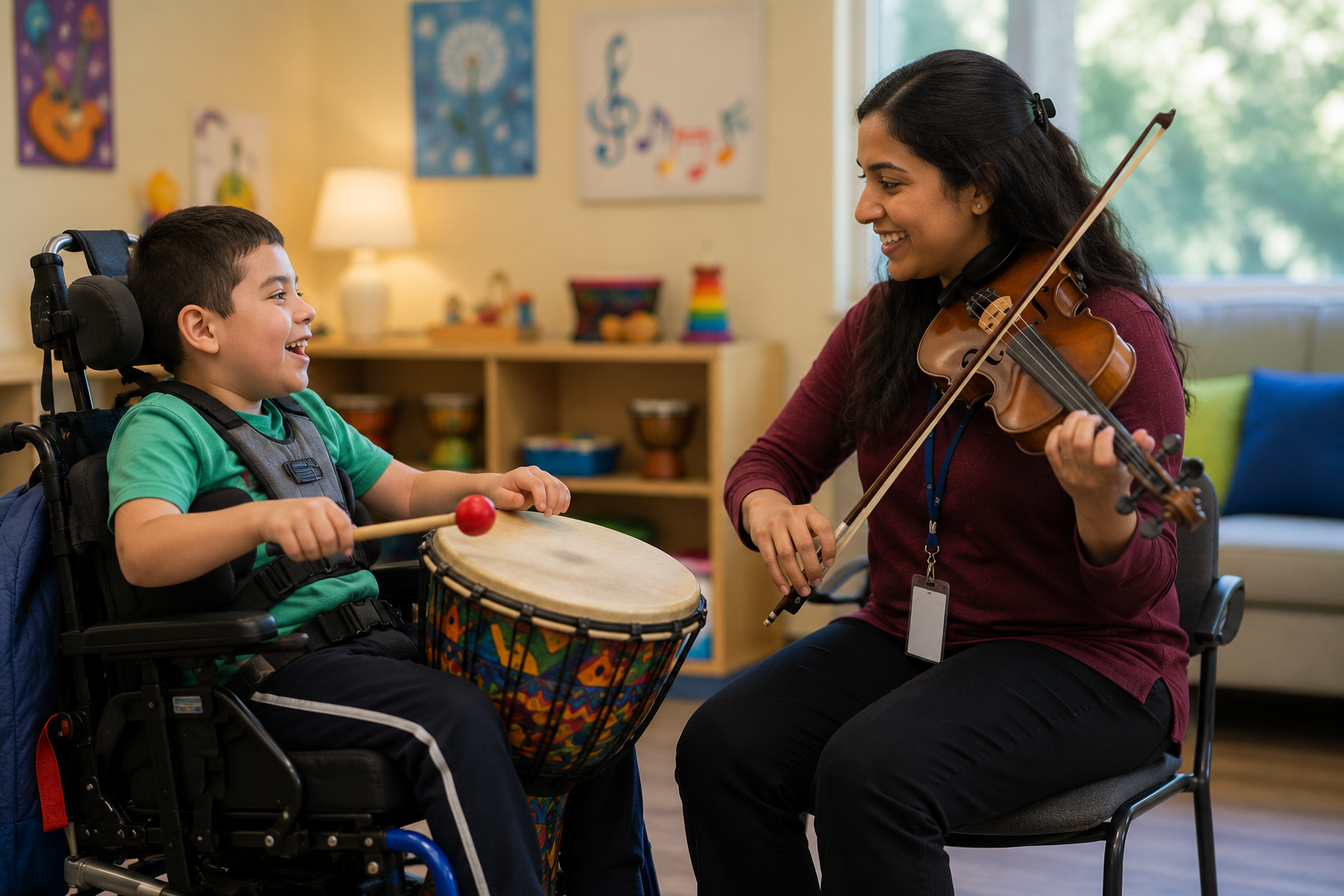
Music therapy supports people across the lifespan from birth to the end-of-life in a wide variety of settings. From the NICU to hospice care, music therapists work across diverse clinical, educational, and residential environments. You’ll find them in hospitals, schools, rehabilitation centers, memory care facilities, and private homes—delivering specialized care tailored to mental health, physical recovery, and developmental needs.
Helpful Resources
Educational Fact Sheets by Population
AMTA offers fact sheets and downloadable resources that highlight how music therapy can support specific populations and treatment goals. These resources provide evidence-based information for patients, families, educators, and healthcare professionals. Click to view each fact sheet.
Music Therapy for Acquired Brain Injury
Following a traumatic or acquired brain injury, music therapy can support recovery of speech, memory, attention, and motor function. Structured music experiences help stimulate neural pathways involved in communication, cognition, and movement.
Music Therapy in Addiction Treatment & Recovery
Within addiction treatment programs, music therapy offers a creative pathway for exploring emotions and strengthening coping strategies. Music-based interventions support self-reflection, emotional regulation, and long-term recovery.
Music Therapy for Mental Health & Substance Use
Adults experiencing mental health or substance use challenges can benefit from music therapy’s opportunities for emotional expression and skill development. Creative engagement with music supports self-awareness, stress management, and social connection.
Music Therapy for Dementia & Memory Care
For older adults living with dementia or memory disorders, music therapy can foster engagement, reduce agitation, and support memory recall. Familiar music often helps individuals reconnect with memories, relationships, and meaningful experiences.
Music Therapy in Hospice & Palliative Care
In hospice and palliative care settings, music therapy provides comfort, emotional support, and opportunities for reflection. Music can create meaningful moments of connection for individuals and their loved ones during end-of-life care.
Music Therapy for Military Service Members & Veterans
Music therapy with military and Veteran populations can bolster recovery, rehabilitation, and resilience and work across treatment domains (e.g., physiological, neurological, psychological, social). It can help our service members improve overall well-being and quality of life and support a successful reintegration into civilian life.
Music Therapy in the Neonatal Intensive Care Unit (NICU)
In neonatal intensive care units, music therapy supports sleep, feeding, and physiological stability in premature and medically fragile infants. Carefully tailored interventions also promote bonding between infants and their caregivers.
Music Therapy for Pain Management
For individuals experiencing acute or chronic pain, music therapy interventions can reduce stress and promote relaxation. Engaging the brain through music may help lessen the perception of pain during treatment and recovery.
Music Therapy in Pediatric Healthcare
Children receiving medical care can benefit from music therapy during hospitalization, procedures, and recovery. Interactive music experiences help reduce anxiety, support coping, and encourage emotional expression.
Music Therapy in Special Education
Within special education environments, music therapy supports goals related to communication, social interaction, and motor development. Music-based learning can also enhance attention, engagement, and readiness for learning.