Understanding Music Therapy and Misconceptions

 Understanding the Difference
What Music Therapy Is...and Is Not
Music enriches everyday life by bringing comfort, connection, joy, and meaning in schools, communities, healthcare settings, and at home. While these experiences are valuable, they are different from music therapy. Music therapy is not simply listening to music, making music, or including music in a helping environment.
Music therapy is a clinical, evidence-based healthcare profession delivered by a board-certified music therapist to address individualized health, education, physical, social, emotional, and behavioral goals. Using research and the therapeutic elements of music within a structured process, music therapists provide specialized care for individuals managing illness, trauma, loss, or other significant life challenges.
The Facts
Music Alone Is Not Music Therapy

Who Provides Music Therapy?
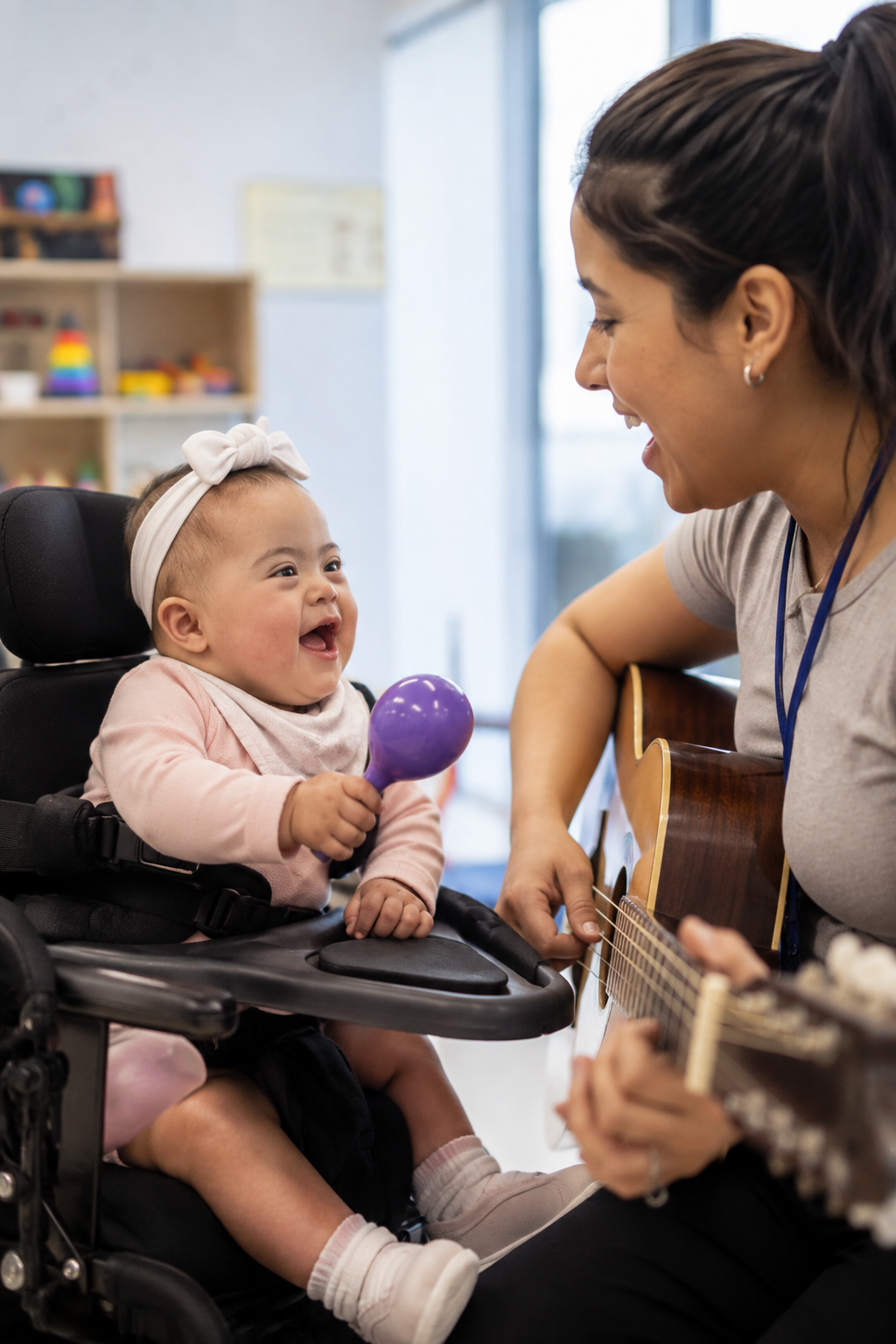
Music therapy is provided by board-certified music therapists. These professionals complete a bachelor’s degree or higher in music therapy from an AMTA-approved college or university. Their preparation includes:
- Extensive academic study
- Training in music, psychology, human development, and medical and therapeutic foundations
- 1,200 hours of clinical training including an internship
After completing their education and clinical training, they are eligible to take the national board certification exam. Those who pass earn the credential Music Therapist Board Certified (MT-BC) through the Certification Board for Music Therapists.
In some states licensure may also be required.
This training prepares music therapists to use music safely, ethically, and effectively with their clients in a variety of settings.

Common Myths About Music Therapy
Misunderstandings about music therapy are common. Here are a few of the most frequent myths and the facts behind them.
“Music therapy is just playing calming music or entertainment.”
Music therapy is a clinical, goal-based profession that uses music to support communication, movement, cognition, emotional well-being, and other needs.
“Anyone musical can be a music therapist.”
Music therapists complete specialized education, clinical training, and board certification.
“You have to be musical or a certain age to benefit.”
No musical experience is required. Music therapists work with people of all ages, abilities, and backgrounds.
“Listening to music is the same as music therapy.”
Music therapy involves individualized goals, treatment planning, and clinical intervention by a board-certified music therapist.

Examples of What Music Therapy Is Not
Music can offer comfort, enjoyment, and connection, but it is only music therapy when provided by a board-certified music therapist through assessment, individualized goals, and documented treatment.
Listening to Favorite Music
Favorite songs may bring pleasure, memories, or calm, but listening alone is not music therapy. A music therapist intentionally uses music to address goals such as communication, mood, orientation, or quality of life.
Supportive Music Groups & Practitioners
Bedside Musicians, Musicians on Call, Music Practitioners, Sound Healers, and Music Thanatologists may provide meaningful comfort and support, but their services are distinct from music therapy unless provided by a board-certified music therapist as part of a treatment plan.
Performances & Informal Music Experiences
Hospital performances, background music, artists in residence, student musicians, and choirs can bring joy and connection, but they are not music therapy because they do not involve individualized clinical goals, assessment, and ongoing evaluation.
Evidence in Action
Music Therapy Can...