
Arthur Flagler Fultz Research Award
 Advancing Music Therapy
About the Fultz Research Award
First awarded in 1999 by the then newly formed American Music Therapy Association, the Fultz Research Award is generously supported by David’s Fund from Tom and Lucy Ott. Since then, it has helped advance meaningful research across the profession and supported projects that deepen our understanding of music therapy in practice.
The Fultz Research Award supports research that can help shape the future of music therapy by encouraging strong clinical inquiry and expanding the evidence base that informs care, decision-making, and best practices across the profession. Areas of interest include clinical research in music therapy, the development and evaluation of best practices, health services research, and exploration of the role of music therapy within emerging healthcare delivery models.
Awards have been given to both individual researchers and collaborative teams, supporting a wide range of projects relevant to music therapy practice and healthcare delivery.
Honoring a Musical Legacy
The Stories Behind the Fultz Research Award

Who Was Arthur Flagler Fultz?
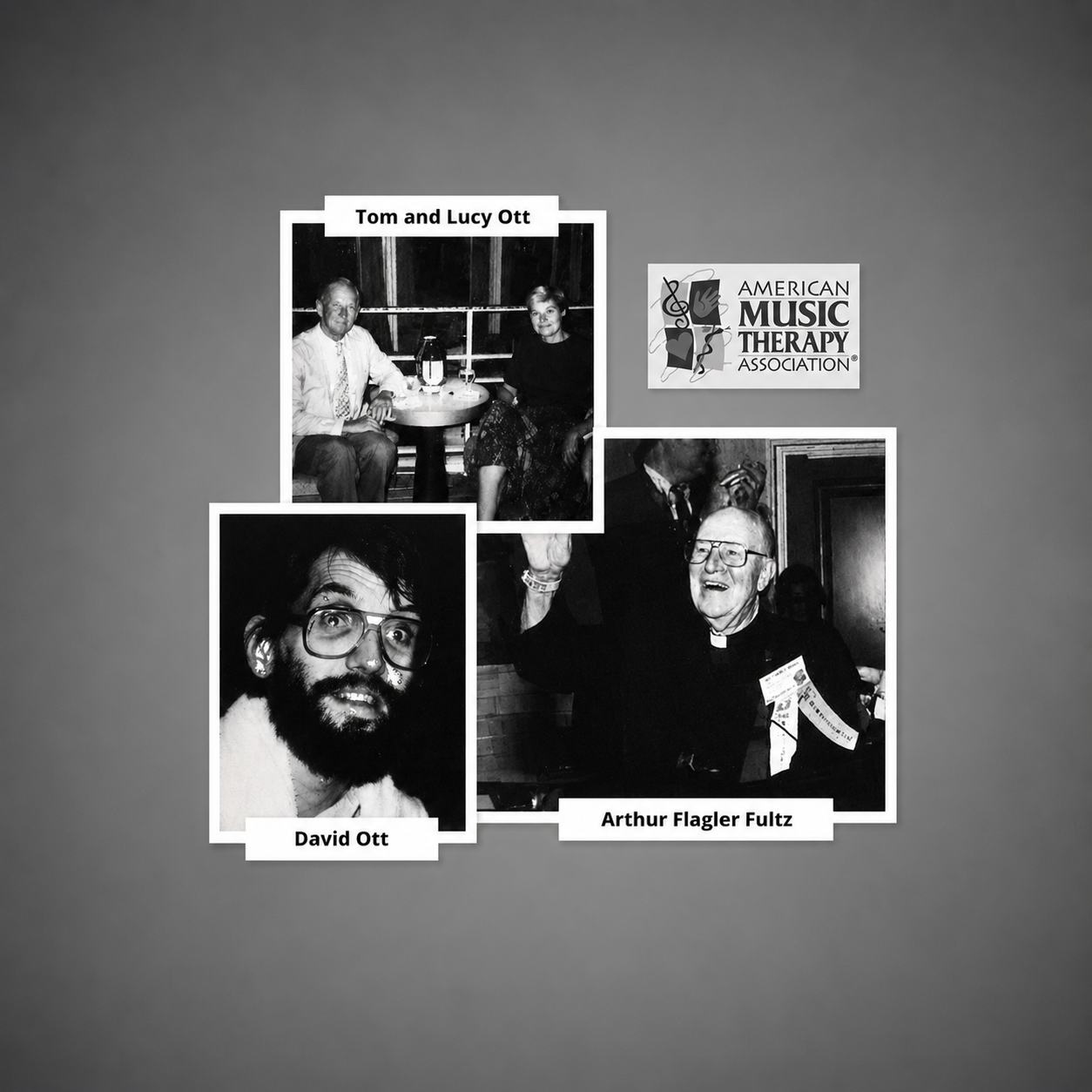
Rev. Arthur Flagler Fultz, RMT #4, was one of the early pioneers of music therapy in the United States. He participated in the 1950 organizational meeting in New York City that led to the founding of the first National Music Therapy Association (NAMT). He later served as the fifth president of NAMT, holding successive one-year terms beginning in 1954.
Rev. Fultz also served as the first chair of the Music Therapy Research Committee, the only standing committee identified in the association’s original bylaws. This award bears his name in recognition of his pioneering leadership and lifelong commitment to music therapy and music therapy research.

What Is David’s Fund?
David’s Fund was established in 1996 by Tom and Lucy Ott in memory of their son, David Ott. The fund was created to help others discover and experience the joy and therapeutic benefits of music that David knew so well. Its support made the Fultz Research Award possible and continues to help advance research that can make a difference in people’s lives.

Who Was David Ott?
David Ott was a bright, adventurous, and idealistic young journalism major. At age 20, he contracted encephalitis, and the resulting brain injury left him with severe physical disabilities. He passed away in 1994.
Music was an important part of David’s life before and after his illness. He loved a wide range of music, from Beethoven, Berlioz, and Ives to B.B. King, Louis Armstrong, and Mahalia Jackson.
In the later years of his life, music became a powerful form of self-expression and companionship. He shared his love of music enthusiastically and expected others to meet that joy with the same spirit. David’s Fund honors that legacy by helping others experience the therapeutic power of music.
Ready to Apply
Application Process
The application process is typically open between March and May each year, with the recipient generally determined over the summer. The award supports a variety of music therapy research projects and welcomes applications from qualified individuals and teams whose work aligns with the award’s purpose.
If you’re interested in applying, you can find full application details and submission information in the Member Portal.
Honoring Research Excellence
Celebrating Our Past Award Recipients
2022-2025
2025
Amy Wilson, Ph.D., MT-BC & Stephanie Kolakowsky-Hayner, PhD, CBIST, FACRM
“Recovery through Intervention and Sound Engagement (RISE)”
2024
Elizabeth L. Stegemöller, PhD, MT-BC
“Virtual Group Therapeutic Singing for Persons with Parkinson’s Disease in Rural Areas”
2023
Helen Shoemark, PhD, RMT & Anthony Meadows, FAMI, LPC, MT-BC
“National Outcomes Measurement for Music Therapy (NOM-MT) in Acute Healthcare Settings: Phase I – A Descriptive Analysis of One Year of Music Therapy Services in a Pediatric and Adult Hospital”
2022
Alaine Reschke-Hernandez, PhD, MT-BC & Allison Gibson, PhD, MSW
“Effectiveness of a Collaborative Music Therapy and Social Work Telehealth Framework to Address the Well Being of Community Dwelling Older Adults”
2018-2021
Eugenia Hernández Ruiz, PhD, MT-BC
“Feasibility of Virtual Parent Coaching of Music Interventions for Young Autistic Children”
2020
Kaleigh Hague, MA, MT-BC
“Comparison of In-Person versus Telehealth Delivery of a Live Singing Intervention for Preterm Infants”
2019
Kate Myers-Coffman, PhD, MT-BC
“Community-Based Implementation of the Resilience Songwriting Program for Adolescent Bereavement – A Mixed Methods Feasibility Study”
2018
Kimberly Sena-Moore, PhD, MT-BC
“Feasibility of the Musical Contour Regulation Facilitation (MCRF) Intervention to Promote Emotion Regulation in At-risk Preschoolers: A Clinical Pilot Study”
2014-2017
2017
Ken Aigen, DA, LCAT, MT-BC
“Music in Everyday Autistic Life: The Significance of Music for Autistic Adults.”
The language used in this proposal reflects current sensibilities articulated by members of the autistic community. Person first language, e.g., “person with autism” and terms such as “autism spectrum disorder” are no longer preferred as they connote an undesirable condition that could be eliminated rather than an essential attribute reflective of natural human differences. “Autism Spectrum Condition” (ASC) is the term preferred by the autistic community.
2016
A. Blythe LaGasse, PhD, MT-BC
“The Impact of Music Therapy Treatment on Auditory Processing in Children with Autism”
2015
Wendy Magee, PhD, MT-BC
“Validating the Music Therapy Assessment Tool for Awareness in Disorders of Consciousness (MATADOC) Against the Best Practice External Reference Standard”
2014
Amy Smith, MA, CCLS, MT-BC
“The Effects of Live Contingent Singing on Preterm Neonates with Bronchopulmonary Dysplasia”
2010-2013
2013
Anthony Meadows, PhD, LPC, MT-BC
Immaculata University
“Examining the Efficacy of Improvisation in Clinical Music Therapy Practice: A Qualitative Research Synthesis”
2012
Alan Turry, DA, LCAT, MT-BC
“Music Therapy/Upper Limb Therapy – Integrated (MULTI I) Group Intervention to Enhance Well-Being and Functional Recovery Post Stroke”
2011
Beth A. Clark, MM, MTA, MT-BC
“Music Therapy as a Pain Modifying Intervention in Children with Life-Limiting Neurological Impairments and Metabolic Disorders”
2010
A. Blythe LaGasse, PhD, MT-BC
“The Effect of Music Therapy Groups on the Social Skills of Children with Autism”
2006–2009
2009
Michael Silverman, PhD, MT-BC
University of Minnesota
“The Effect of Family-Based Education Music Therapy on Depression, Satisfaction with Life, and Service Utilization: A Randomized Effectiveness Study with Three Month Follow-up”
2008
Debra Burns, PhD, MT-BC & Anthony Meadows, PhD, LPC, MT-BC
University of Indiana & IU Simon Cancer Center
“Listening and Locating: Understanding the Benefits of Music Imagery Experiences During Chemotherapy Infusion”
2007
Abbey Dvorak, MA, MT-BC
University of Iowa Hospitals and Clinics
“Music Therapy Support Groups for Individuals Diagnosed with Cancer and Their Families”
2006
Xueli Tan, MM, MT-BC
Cleveland Music School Settlement
“Effect of Patient-Preferred Music, Relaxation Music, and Standard Care Environment on Patients in Intensive Care Units”
1999–2005
2005
Christine Tuden Neugebauer, MS, LPC, MT-BC
Shriners Hospital for Children – Galveston
“Physical, Developmental, and Behavioral Outcomes of a Group Music and Exercise Program for Young Children with Severe Burns”
2004
Bryan Hunter, PhD, MT-BC
Nazareth College
“Music Therapy as an Adjunctive Treatment in the Management of Stress for Patients Being Weaned from Mechanical Ventilation”
2003
Suzanne Hanser, EdD, MT-BC
Berklee College of Music
“Music Therapy with Individuals with Dementia and Caregivers”
2003
Annette Whitehead-Pleaux, MAMT, MT-BC
Shriners Hospital for Children – Boston
“The Effects of Music Therapy on Pediatric Pain and Anxiety”
2002
Anne Lipe, PhD, MME, MT-BC
Shenandoah University
“Construct Validation of Two Music-Based Assessments for People with Dementia”
2000
Michael E. Clark, MME, MT-BC
Tennessee Technological University
“Effectiveness of Music Therapy in Ameliorating Symptoms Associated with Radiation Therapy”
1999
Janice W. Stouffer, MT-BC
Penn State University – Milton S. Hershey Medical Center
“A Comparison of Music to Music with Mother’s Voice on Physiological Responses, Level of Sedation and Requirements for Drug Therapy for Critically Ill Infants and Children”