The Arthur Flagler Fultz Research Award is now $20,000
What is the Arthur Flagler Fultz Research Award (Fultz Research Award)
The Fultz Research Award is an annual research grant of $20,000. It was first awarded in 1999 by the then newly formed American Music Therapy Association (AMTA) and generously supported by David’s Fund from Tom and Lucy Ott. The Award is designed to encourage, promote, and support research towards evidence-informed music therapy practice.
APPLICATIONS ARE NOW BEING ACCEPTED
Applications are now being accepted for the Arthur Flagler Fultz Research Award. These will be accepted by email only and must be received by 11:59 pm Eastern on May 31, 2026, to be considered eligible.
Submit your application to fultz@musictherapy.org using this electronic application form:
Guidelines and Procedures can be read at the beginning of the online application form.
Instructions: All applications must be typed and submitted electronically using the Fultz Guidelines document above. Please provide information for all fields. Applications will be accepted electronically only. Application form submissions are accepted in Word format only (attachments permissible as PDF or Word documents).
Please download/save the application form to your computer, then save it as a new file, using the Member number of the principal investigator and the word “Fultz.” Example: If the principal investigator is John Smith and John’s Member number is M212121, the filename should be M212121fultz.docx. If you do not know your member number, check your AMTA account online or feel free to contact the AMTA national office.
Follow the application instructions exactly. Include all required forms and information in the order listed. Incomplete applications will not be reviewed.
To enter required information in the Word document, click on the gray boxes and type in your text. Remember to save your work!
The initial committee review of all applications will be conducted with all identifying information removed for anonymous review. References to individuals or organizations involved in the research project should appear only in the APPLICANT INFORMATION SECTION. The remainder of the proposal, the ANONYMOUS REVIEW SECTION, must be submitted without reference to individuals or organizations involved in the research project.
Electronically submit applications to: fultz@musictherapy.org.
Applications must be received by 11:59 pm Eastern on May 31, 2026
CONFIRMATION OF RECEIPT:
For a Fultz grant submission to be considered eligible and complete, the submitter must receive a confirmation from AMTA indicating that the application was received. If you do not receive a confirmation, the application will not be considered a complete submission. Fultz receipt confirmations are sent within 48 hours (business days) of submission.
A Little History
Who was Arthur Flagler Fultz?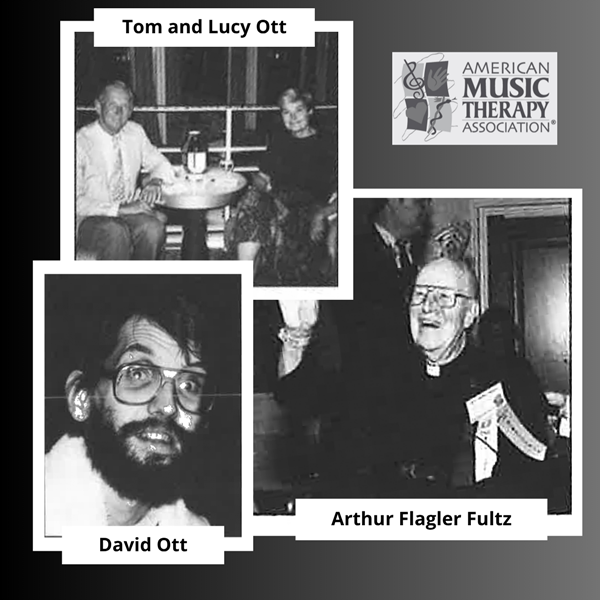
Rev. Arthur Flagler Fultz, RMT #4, participated in the 1950 organizational meeting in New York City that resulted in the founding of the first National Music Therapy Association (NAMT) in the United States. He served as the fifth president of NAMT, serving successive one-year terms beginning in 1954. Rev Fultz served as the first chair of the Music Therapy Research Committee, the only standing committee identified in the Association's original by-laws. This Research Award is named in his honor in recognition of his pioneering efforts and lifelong commitment to music therapy.
What is David’s Fund?
Tom and Lucy Ott established David's Fund in 1996 in memory of their son David to help others discover and know the joy and therapeutic benefits of music that David experienced.
Who was David Ott?
David Ott was a young, bright journalism major, adventurous and idealistic, who contracted encephalitis at age 20. The resulting brain injury left David with severe physical disabilities, and he passed away in 1994.
Music was an important part of David's life, both before and after his illnesses. All kinds of music interested him, from Beethoven, Berlioz and Ives, to B.B. King, Louis Armstrong, and Mahalia Jackson. In the later years of his life, music was a means of self-expression, and music kept David company. He enthusiastically shared his music with everyone and expected people to be equally enthusiastic in return.
Previous Recipients of the Arthur Flagler Fultz Research Award
| Presented |
Awardee |
Study Title |
| 2025 |
Amy Wilson, Ph.D., MT-BC
Stephanie Kolakowsky-Hayner, PhD, CBIST, FACRM
|
"Recovery through Intervention and Sound Engagement (RISE)" |
|
2024
|
Elizabeth L Stegemöller, PhD, MT-BC |
"Virtual Group Therapeutic Singing for Persons with Parkinson’s Disease in Rural Areas" |
| 2023 |
Helen Shoemark, PhD RMT & Anthony Meadows, FAMI, LPC, MT-BC
|
"National Outcomes Measurement for Music Therapy (NOM-MT) in Acute Healthcare Settings : Phase I - A Descriptive Analysis of One Year of Music Therapy Services in a Pediatric and Adult Hospital" |
| 2022 |
Alaine Reschke-Hernandez, PhD, MT-BC & Allison Gibson, PhD, MSW |
"Effectiveness of a Collaborative Music Therapy and Social Work Telehealth Framework to Address the Well Being of Community Dwelling Older Adults"
|
| 2021 |
Eugenia Hernandez-Ruiz, PhD, MT-BC |
“Feasibility of Virtual Parent Coaching of
Music Interventions for Young Autistic Children”
|
| 2020 |
Kaleigh Hague MA, MT-BC
|
"Comparison of In-Person versus Telehealth Delivery of a Live Singing Intervention for Preterm Infants."
|
|
2019
|
Kate Myers-Coffman,
PhD, MT-BC
|
"Community-Based Implementation of the Resilience Songwriting Program for Adolescent Bereavement - A Mixed Methods Feasibility Study."
|
| 2018 |
Kimberly Sena-Moore,
PhD, MT-BC
|
“Feasibility of the Musical Contour Regulation Facilitation (MCRF) Intervention to Promote Emotion Regulation in At-risk Preschoolers: A Clinical Pilot Study.”
|
| 2017 |
Ken Aigen, DA, LCAT, MT-BC
|
"Music in Everyday Autistic Life:
The Significance of Music for Autistic Adults."*
*The language used in this proposal reflects current sensibilities articulated by members of the autistic community. Person first language, e.g., “person with autism” and terms such as “autism spectrum disorder” are no longer preferred as they connote an undesirable condition that could be eliminated rather than an essential attribute reflective of natural human differences. "Autism Spectrum Condition" (ASC) is the term preferred by the autistic community.
|
| 2016 |
A. Blythe LaGasse, PhD, MT-BC
|
"The impact of music therapy treatment on
auditory processing in children with autism."
|
|
2015
|
Wendy Magee, PhD, MT-BC
|
"Validating the Music Therapy Assessment Tool for Awareness in Disorders of Consciousness (MATADOC) Against the Best Practice External Reference Standard."
|
| 2014 |
Amy Smith, MA, CCLS, MT-BC
|
"The Effects of Live Contingent Singing on Preterm Neonates with Bronchopulmonary Dysplasia."
|
| 2013 |
Anthony Meadows, PhD, LPC, MT-BC; Immaculata University
|
"Examining the efficacy of improvisation in clinical music therapy practice: A qualitative research synthesis."
|
| 2012 |
Alan Turry, DA, LCAT, MT-BC |
"Music Therapy/Upper Limb Therapy - Integrated (MULTI I) Group Intervention to Enhance Well-Being and Functional Recovery Post Stroke."
|
| 2011 |
Beth A. Clark, MM, MTA, MT-BC |
"Music Therapy as a Pain Modifying Intervention in Children with Life-Limiting Neurological Impairments and Metabolic Disorders."
|
| 2010 |
A. Blythe LaGasse, PhD, MT-BC |
"The Effect of Music Therapy Groups on the
Social Skills of Children with Autism."
|
| 2009 |
Michael Silverman, PhD,
MT-BC; University of Minnesota |
"The Effect of Family-Based Education Music Therapy on Depression, Satisfaction with Life, and Service Utilization: A Randomized Effectiveness Study with Three Month Follow-up."
|
| 2008 |
Debra Burns, PhD, MT-BC & Anthony Meadows, PhD, LPC, MT-BC; University of Indiana & IU Simon Cancer Center
|
"Listening and locating: Understanding the benefits of music imagery experiences during chemotherapy infusion."
|
| 2007 |
Abbey Dvorak, MA,
MT-BC; University of Iowa Hospitals and Clinics
|
"Music Therapy Support Groups for Individuals Diagnosed with
Cancer and their Families"
|
| 2006 |
Xueli Tan, MM,
MT-BC; Cleveland Music School Settlement |
"Effect of Patient-Preferred Music, Relaxation Music, and Standard Care Environment on Patients in Intensive Care Units."
|
| 2005 |
Christine Tuden Neugebauer, MS, LPC, MT-BC; Shriners Hospital for Children - Galveston |
"Physical, Developmental, and Behavioral Outcomes of aGroup Music and Exercise Program for Young Children with Severe Burns."
|
| 2004 |
Bryan Hunter, PhD,
MT-BC; Nazareth College |
"Music Therapy as an Adjunctive Treatment in the Management of Stress for Patients Being Weaned from Mechanical Ventilation."
|
| 2003 |
Suzanne Hanser, EdD,
MT-BC; Berklee College of Music |
"Music Therapy with Individuals with Dementia and Caregivers."
|
| 2003 |
Annette Whitehead-Pleaux, MAMT, MT-BC; Shriners Hospital for Children - Boston
|
"The Effects of Music Therapy on Pediatric Pain and Anxiety."
|
| 2002 |
Anne Lipe, PhD, MME,
MT-BC; Shenandoah University |
"Construct Validation of Two Music-Based Assessments for
People with Dementia."
|
| 2000 |
Michael E. Clark, MME,
MT-BC; Tennessee Technological University |
"Effectiveness of music therapy in ameliorating symptoms
associated with radiation therapy."
|
| 1999 |
Janice W. Stouffer,
MT-BC; Penn State University - Milton S. Hershey
Medical Center |
"A comparison of music to music with mother's voice on physiological responses, level of sedation and requirements for drug therapy for critically ill infants and children."
|